
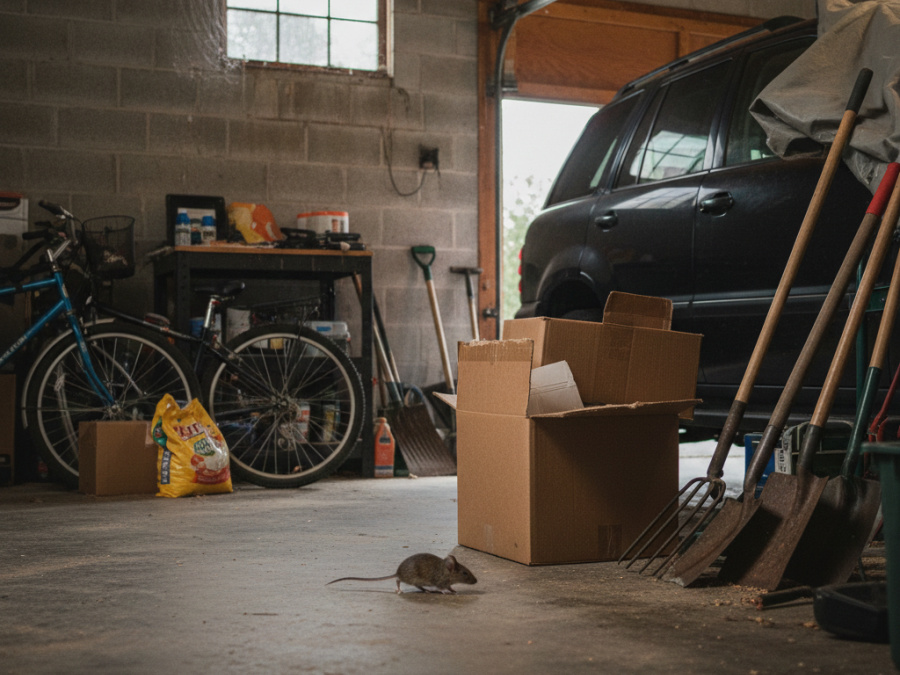
How to Get Rid of Mice in Your Garage and Keep Them Out for Good
Finding signs of mice in the garage is unsettling, but it’s also extremely common. Garages offer exactly what rodents are looking for: shelter, darkness, easy access, and just enough food or moisture to survive. Once they move in, they don’t take long to cause damage.
Mice chew wiring, insulation, cardboard, and stored items. They leave droppings, urine, and nesting material behind. Over time, that creates both structural and sanitation issues. The good news is that garage infestations are usually solvable once you understand how mice move, where they enter, and why garages attract them in the first place.
How to Tell If Mice Are Living in Your Garage
Garages are cluttered by nature, which makes early signs easy to miss. Most homeowners notice mice indirectly before ever seeing one.
Common indicators include scratching or rustling sounds at night, especially along walls. Droppings usually appear along the perimeter of the garage rather than in the open. You may also see gnaw marks on cardboard boxes, wiring, insulation, or pet food bags.
A sharp, ammonia-like odor can indicate urine. Shredded paper, fabric, or insulation often points to nesting. If large items are stored against walls, it’s worth pulling them back occasionally to inspect behind and underneath.
What Kind of Rodents Are Usually Involved
Most garage infestations involve house mice. They’re small, flexible, and able to squeeze through openings that look far too tight to be usable.
Field mice and deer mice can also move into garages, especially in areas near woods or undeveloped land. Rats are less common but far more destructive. While the prevention strategy is similar, rats require heavier-duty traps and more aggressive exclusion.
Why Garages Are Such Easy Targets
Garages provide everything mice want and very little they fear. They’re quiet, lightly sealed, and full of hiding places. Stored food, spilled seed, or even trace moisture is enough to sustain them.
Just as important are the access points. Small gaps under the garage door, cracks in slabs, unsealed framing, and utility penetrations give mice easy entry. Once temperatures drop, garages become prime shelter.
How Mice Actually Move Inside a Garage
Mice are thigmotactic, meaning they prefer to travel with their whiskers touching a surface. They don’t run through the middle of a room. They hug walls and edges.
In garages, their primary travel path is almost always where the garage door track meets the wall. After squeezing under a bottom seal, this is typically the first path they use as they move deeper into the space.
This detail matters when placing traps and inspecting for entry points.
Effective Ways to Remove Mice From a Garage
Removal works best when trapping and sealing happen at the same time.
Spring Traps
Snap traps remain one of the most effective options. Placement matters more than bait. Traps should be set perpendicular to the wall, with the trigger end closest to the surface mice travel along.
Placing traps near the vertical garage door tracks is especially effective, as this is where mice tend to pass immediately after entering. Peanut butter or similar sticky foods work better than cheese.
Check traps frequently to avoid odor issues.
Live Traps
Live traps catch mice without killing them, but they create a second problem: relocation. Releasing mice nearby simply moves the problem. Releasing them far away may violate local regulations or shift the issue to someone else. Live trapping only makes sense if you have a lawful, humane plan for release.
Glue Traps
Glue traps often leave mice alive and struggling and are difficult to deal with afterward. From a practical standpoint, they’re no more effective than snap traps and tend to create more frustration than solutions.
Rodent Poison
Poison is rarely a good choice for garages. It poses risks to pets, children, and wildlife. Poisoned mice often die inside walls or inaccessible areas, creating lingering odor problems. Secondary poisoning of predators is another concern.
Natural Predators
Some cats and certain dog breeds can catch mice, but pets alone are unreliable. Homes with stored pet food often attract rodents regardless of whether animals are present.
Closing the Door on Future Infestations
Removing mice without sealing entry points almost guarantees they’ll return.
Upgrade the Bottom Door Seal
The gap under the garage door is one of the most common entry points. A worn rubber or vinyl bottom seal is easy for mice to chew through.
Rodent-resistant bottom seals are designed with embedded stainless steel wool or wire mesh. These seals block drafts and moisture while also preventing gnawing. For long-term prevention, they’re far more effective than standard gaskets.
In areas with red clay and frequent moisture, a proper bottom seal also prevents water from wicking into the garage from the concrete apron. That moisture can contribute to mold growth and deterioration along the lower door panels over time.
Side and top weatherstripping should also be inspected and replaced if it no longer seals tightly.
Seal Structural Gaps
Cracks in concrete slabs, gaps where framing meets the slab, and openings around pipes or wiring should be sealed. Packing steel wool into gaps before sealing helps prevent mice from chewing their way back in.
Pay close attention to the area behind the vertical door tracks, where drywall and framing often leave small but usable gaps.
Reduce Shelter and Food Sources
Clutter gives mice places to hide and nest. Storing items off the floor and away from walls makes the garage less inviting.
All food sources should be sealed in hard plastic containers. Pet food, bird seed, grass seed, and fertilizers are frequent culprits. Even small spills can sustain rodents.
When Mice Cause Garage Door Problems
Mice don’t just damage stored items. They often chew the thin, low-voltage wires that run to the safety sensors at the bottom of the garage door tracks.
If a garage door suddenly refuses to close and the opener lights flash, chewed sensor wires are a very common cause. This issue is frequently misdiagnosed as an opener failure.
Deterrents and Repellents: What to Expect
Peppermint sprays and commercial repellents may discourage mice from entering, but they rarely remove an established infestation. Ultrasonic devices produce mixed results and work best as a supplemental measure rather than a primary solution.
These tools can support prevention but shouldn’t be relied on alone.
Why Mice Rarely Leave on Their Own
Once mice find a garage that offers shelter and food, they tend to stay. Their breeding cycle is fast, and populations grow quickly. Seasonal changes may increase activity, but infestations usually persist unless access points are closed and conditions change.
Quick Garage Audit for Rodent Prevention
- Daylight Test: With the garage door closed and lights off, can you see daylight at the bottom corners?
- Pencil Test: Can a pencil slide under any section of the bottom seal?
- Track Gaps: Are there gaps behind the vertical door tracks where drywall meets framing?
- Seal Condition: Is the bottom seal brittle, cracked, or showing chew marks at the corners?
If the answer to any of these is yes, mice have a clear path in.
When Professional Help Makes Sense
Most light infestations can be handled with proper trapping and sealing. If mice keep returning, wiring is damaged, or access points aren’t obvious, professional help may be warranted.
A garage that’s sealed, dry, and well-maintained stops being an easy shelter. When mice lose access and resources, they move on and the problem stays solved.